The Mood Machine That Wasn’t: A DIY Diary of Sensors, Kettles and Existential Dread
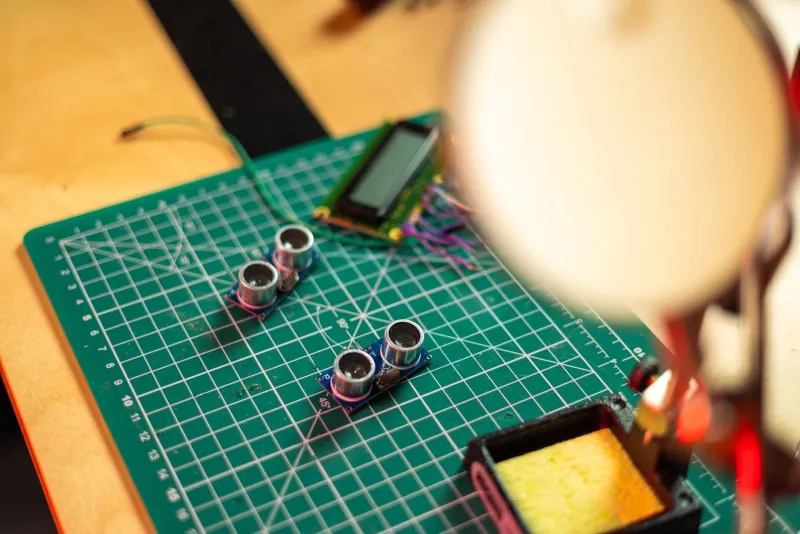
Every few months I get an idea that sounds brilliant for approximately eleven minutes. This one was: a tea-powered mood station. A small desk gadget that would log when the kettle boiled, record the room temperature and let me press a button to say how I was feeling. Then, presumably, it would tell me something profound about routine, ritual and the human condition.
It did not tell me anything profound. It did tell me that my washing machine sounds a lot like a kettle if you are a cheap sound sensor with no standards. But we will get to that.
Day 1: The Grand Vision
The plan was simple. A Raspberry Pi Zero, a temperature sensor, a sound sensor, a big friendly button and an old biscuit tin to house the whole thing. Total budget: about thirty quid, plus whatever dignity I was prepared to lose. The mood station would sit on my desk and quietly observe. It would be the Socrates of kitchen appliances. It would ask: how are you, really? And then it would log the answer in a CSV file like a tiny, judgmental accountant.
Socrates said the unexamined life is not worth living. I would like to add that the over-examined kettle is not worth boiling. But I did not know that yet.
Day 2: Parts, Palaver and a Pie Tin
The parts arrived in a series of jiffy bags. The temperature sensor was tiny enough to lose under a fingernail. The sound sensor looked like a small microphone that had given up on its dreams. The button was satisfyingly chunky, the kind of button you want to press even when it does nothing.
I soldered two wires and immediately regretted every life choice that had led me to this point. My soldering iron is older than some of my friendships and considerably less reliable. The biscuit tin was repurposed as a case. It had previously held shortbread. I felt this was thematically appropriate.
Day 3: The Sound Sensor and the Washing Machine
The first version of the code was less a programme and more a ransom note. It listened for a sound above a certain threshold and logged a kettle boil. Within twenty minutes it had logged eighty-four boils before 10am. I had made one cup of tea. The washing machine was spinning. The fridge was humming. A pigeon landed on the windowsill and apparently set off a boil event.
I adjusted the threshold. Then I adjusted it again. Then I sat on the floor and adjusted it while questioning the nature of measurement. The sound sensor was not detecting kettles. It was detecting life. Loud, inconvenient, non-kettle life.
Day 4: The Mood Button
The mood button had four labels: Fine, Frazzled, Feral and Fortified. I wired it up and wrote a debounce routine, which is a fancy way of saying 'please stop logging the same press four hundred times'. It did not work. At one point the dashboard informed me I had been Frazzled 412 times in an hour. I wanted to argue, but I was, in fact, quite frazzled by then.
I fixed the debounce. I also realised that forcing yourself to categorise your mood as Feral at 3pm is a surprisingly effective way to make yourself laugh. The gadget was already earning its keep, even if it was mostly earning it as a joke.
Day 5: The Dashboard of Dubious Insight
The dashboard showed room temperature, boil count and mood over time. It looked like a weather forecast for a small, anxious planet. There was a spike in boils around 11am, a dip in mood around 3pm, and a mysterious cluster of 'Fortified' events on Friday evening that I can only attribute to the arrival of a takeaway.
Did more tea correlate with better mood? Sort of. Did less tea correlate with existential dread? Also sort of. Correlation is not causation, but it is a lovely excuse for another biscuit.
Day 6: The Socrates Bit
Here is where the project got interesting. The mood station was bad. It was inaccurate, over-sensitive and housed in a biscuit tin. But it made me notice things. It made me notice how often I boiled the kettle without thinking. It made me notice that my mood had a rhythm, and that the rhythm was not entirely dictated by work. It made me notice that ritual is just routine with better lighting.
Socrates asked questions in the marketplace. I asked why my kettle sensor needed a calibration nap. But the spirit was similar. A bad build can still teach you something useful. It can teach you to pay attention. It can teach you that the point of a small project is not always the finished object. Sometimes the point is the half-hour you spend wiring a button and thinking about why you wanted to press it.
What I Learned (and What I’d Tell Anyone Starting a Project in 2026)
First: start smaller than you think. My mood station had three sensors and a dashboard. It should have had one sensor and a notebook. Second: expect failure, and label your wires. Third: document the ridiculous parts, because they are the parts you will actually remember. Fourth: do not over-engineer the thing that is supposed to be fun. Fifth: if your project involves a sound sensor, please, for the love of all that is holy, test it near a washing machine before you trust a single data point.
It is 2026, and home projects have never been easier to start or easier to abandon. My advice is to start anyway. Use the parts you have. Accept that the first version will be wrong. The mood station is still on my desk. It is wrong most of the time. I love it.
Would I recommend building one? Yes. Not because it works, but because it reminds you that a kettle boil is not really data. It is a small, hopeful pause. And sometimes that is the only insight you need.