Binfluencer Nation: Field Notes on Wheelie Bin Folklore and the Council Colour Code
This is not a proper experiment. I want to be clear about that from the start. There was no control group, no ethics committee and no funding beyond a flask of tea and a folding chair. What follows is a fortnight of standing at a window in a British suburb, watching my neighbours put out their bins, and writing things down.
I call it an experiment because that sounds better than 'being nosy'. The street did not consent. The street, frankly, did not notice.
A Note on Method
The method was simple. Each week, I recorded the following: which bins went out, when they went out, who put them out, and whether anyone was watching. The last category turned out to be the most interesting. It is one thing to put out a bin. It is another to put out a bin while maintaining the dignified air of someone who has not thought about bins at all.
The Calendar Wars
The first discovery is that nobody actually knows their bin day. Everyone believes they know it, and everyone is wrong in a slightly different way. The council calendar is a PDF, three clicks deep on a website designed in 2011, and it changes at bank holidays with the cheerful unpredictability of a cat.
The result is a street-wide game of bluff. One household puts out the recycling on a Tuesday because they always have. Another puts out the general waste because they heard a rumour. A third puts out nothing, goes online at 11pm and discovers that the collection has been moved to Thursday due to a public holiday nobody remembered.
The Colour Code
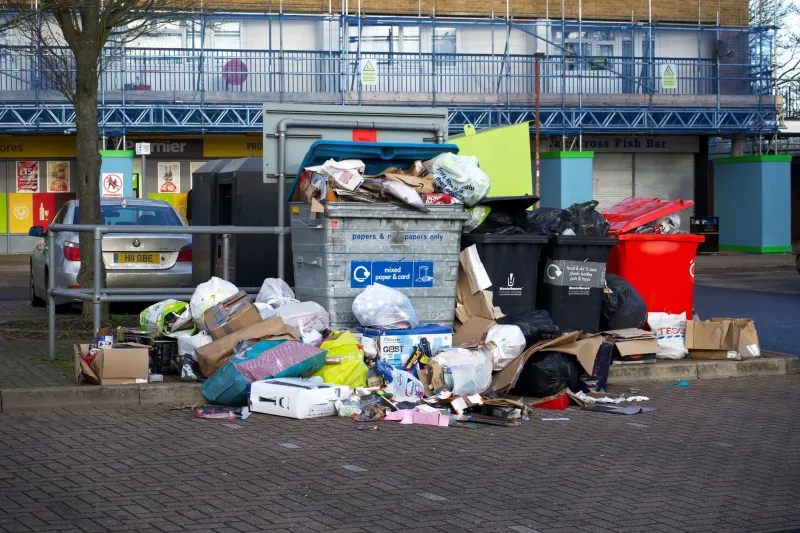
Councils love a colour. Every authority has its own system, and no two systems agree. In one borough, green means garden waste; in the next, green means recycling; two streets away, green means nothing at all because that bin was discontinued in favour of a smaller blue one and a stern leaflet.
The colour code is the closest thing modern Britain has to heraldry. Each wheelie bin is a little shield, and each shield tells you what kind of household lives there. The household with three bins is organised and possibly smug. The household with one bin and a carrier bag of shame on the lid is living on the edge. The household with a bin so clean you could eat your dinner off it is not to be trusted.
The Night Before
Bin night has its own choreography. The early putters-out place their bins at 6pm, like people setting out deckchairs for a parade. The late putters-out wait until 11pm and then creep out in dressing gowns, hoping not to be seen. The philosophical putters-out leave it until 6am and accept whatever fate brings.
There is an etiquette to positioning. Too close to the road and you are inviting a fine. Too far from the road and you are inviting a missed collection. Exactly right is a matter of local custom, and every street has an elder who will tell you, with great patience, that the lorry cannot reach a bin placed like that.
The Six O'Clock Dash
The bin lorry arrives between 6am and 4pm, which is a window of time so wide it could contain a small holiday. This means that on collection day, the street becomes a place of low-level alertness. Curtains twitch. Front doors open and close. A man in a fleece walks to the end of his drive and looks left, then right, then goes back inside.
The dash itself is a thing of beauty. A neighbour who has forgotten to put the bin out hears the lorry, and is suddenly a sprinter. They appear at the door in slippers, dragging a wheelie bin behind them like a reluctant dog, and reach the kerb just as the binmen arrive. There is a brief exchange of looks. The binmen, who have seen everything, take the bin without comment. This is the closest Britain gets to a silent round of applause.
The Contamination Inquisition
Every street has a binfluencer: the person who reads the leaflets, understands the difference between a tetra pak and a yoghurt pot, and is not afraid to say so. They are our rubbish conscience. They know that the recycling lorry will reject a whole load if there is a single greasy pizza box in it. They have strong views about black plastic.
Occasionally, a note appears taped to a lid. The note is always polite and always devastating. 'Please do not put nappies in the blue bin. This is why our collection was missed.' It is signed by nobody, which makes it worse. The whole street knows who wrote it. The whole street pretends not to.
The Bin Guard
Some neighbours treat their wheelie bin like a small territorial dog. They will not let it out of their sight on collection day. They position it, check it, and reposition it. When the lorry comes, they stand at the gate and supervise the emptying as if it were a delicate medical procedure.
I have come to respect the bin guard. In a world of unreliable calendars and shifting rules, they are the ones holding the line. They know that a bin left out too long can attract foxes. They know that a bin in the wrong place can attract a penalty notice. They are, in their way, civic heroes in fleeces.
What the Rubbish Says
After a fortnight of observation, I can report that the bins reveal more about us than we might like. They show our recycling guilt, our garden ambitions, our complicated relationship with cardboard. They show that we are a nation of rule-followers who secretly suspect we are doing it wrong.
And they show that, on collection day, we are all briefly part of something larger than ourselves: a street-wide, synchronised, faintly ridiculous performance, performed for a lorry that may or may not arrive.
The experiment was unscientific. The findings, I'm afraid, are entirely reliable.