Please Take One: Reading the Village Noticeboard as Britain’s Great Unfinished Novel
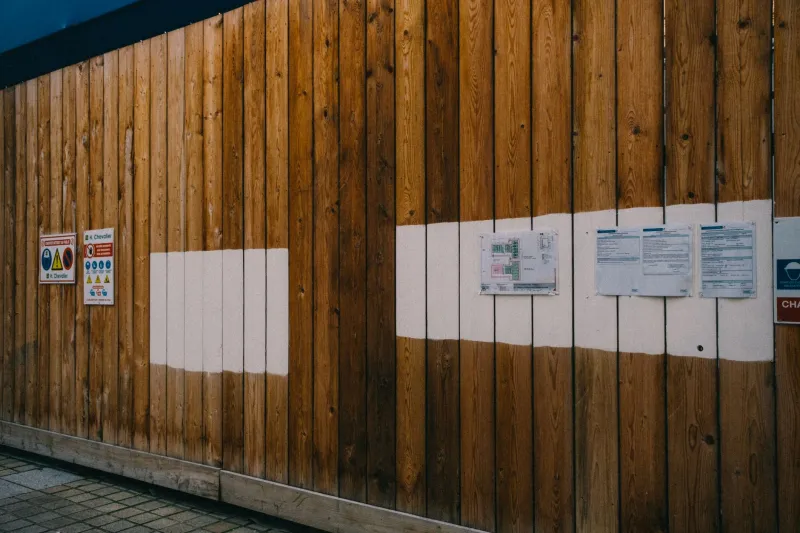
The noticeboard is in the library foyer, between the fire exit and a poster about a missing cat called Nigel. It is covered in laminated A4. There is a quiz night, a yoga class, a bereavement group, a repair café, and a handwritten sign that says 'PLEASE DO NOT REMOVE THE NOTICES'. Someone has removed a notice. The sign remains.
This is not a niche interest. This is literature. The parish noticeboard is Britain’s great unfinished novel, serialised weekly in drawing pins and laminated sheets, with a cast of thousands and a plot that makes no sense but remains deeply compelling. In 2026, when so much community life has moved online, the noticeboard is still doing its quiet, stubborn work. It deserves to be read properly. With tea, ideally, from the church hall kitchen.
The typography of civic hope
The first thing you notice is the fonts. Comic Sans is alive and well. Times New Roman is present, unsmiling, in a notice about bins. There is a lot of bold and underline, sometimes in the same sentence, usually on the words 'ALL WELCOME' and 'NO PARKING'. One poster has six different fonts and a clip-art star. It is for a beetle drive. It is magnificent.
Lamination is the great democratiser. Anyone can laminate. The result is a shiny, slightly bubbly surface that says: this event is real, this event is happening, this event has been to the stationery cupboard and back. A laminated notice is a notice with commitment. A non-laminated notice is a rumour.
A short listicle of recurring characters
- The Passive-Aggressive Corrector. They do not remove the original notice. They pin a smaller notice beside it, usually typed, always polite, occasionally devastating. 'CORRECTION: The yoga class is on Thursday, not Tuesday. We apologise for any confusion.' The original notice remains, unrepentant, still advertising Tuesday.
- The Optimistic Event Organiser. Their notices are bright and crowded. They believe in the quiz night. They believe in the bring-and-buy sale. They have included a small map. They have written 'fun for all ages' without irony. They are the heroes of the form.
- The Gatekeeper. Their notices are about notices. 'Please do not remove until after the 12th.' 'Please take one.' 'Please do not take more than one.' They are the unreliable narrators of the corkboard.
- The Missing Cat Cartographer. A photo of a cat, a date, a rough map of the rec, and the words 'last seen near the pavilion'. Nigel again. Nigel is always last seen. Nigel is a recurring motif.
- The Library Notice with Six Fonts. It advertises a coffee morning, a reading group, and a talk on local history. It is three notices in a trench coat. It is also the most ambitious piece of layout in the building.
The correction slip as literary device
The correction slip is the noticeboard’s finest invention. It is how the community edits itself in public. Someone has made a mistake. Someone else has noticed. The mistake cannot simply be removed, because that would require finding the key to the cabinet, and the key is with someone called Margaret, and Margaret is on holiday. So a correction is pinned over the top, or beside it, or slightly below and to the left.
The result is a palimpsest of civic life. You can read the history of a village in the layers: the original event, the correction, the second correction, the small handwritten note that says 'actually it is in the church hall, not the village hall, sorry'. This is not chaos. This is editing. This is how a community writes a novel together, one apology at a time.
What the noticeboard says about 2026
It says that community is not a nostalgic idea. It is practical. The notices are for warm hubs, baby-and-toddler groups, grief support, food banks, coffee mornings, and a class that teaches you how to fix a toaster. They are for people who need company, or a cheap morning out, or a reason to leave the house. They are also for people who just want to know when the bins go out.
There is something quietly radical about a noticeboard in 2026. It has no algorithm. It cannot go viral. It cannot be searched, except by standing in front of it and reading. It is slow. It is local. It is held together by staples and the belief that someone, somewhere, might fancy a quiz.
How to read a noticeboard properly
First, stand close. Do not skim. Read the layers, not just the top sheet. Notice the crossings-out. Notice the dates that have been changed in biro. Notice the small handwritten additions: 'tea and biscuits provided', 'free entry', 'wheelchair accessible', 'please bring a mug'. These are the details that tell you what kind of event it really is.
Second, take a photograph. Not to post online, necessarily, but to preserve the composition. A good noticeboard is an artwork. It is also a historical document. In twenty years, someone will want to know that the parish council met on a Tuesday in 2026 and that the fete was nearly cancelled and then was not.
Third, do not remove anything. You are a reader, not an editor. Leave the correction slips where they are. Leave Nigel where he is.
The noticeboard is not a noticeboard. It is a novel, a newspaper, a lost-and-found, a support group, and a mild argument about parking, all pinned to a cork square in a draughty hall. It is Britain at its most local and its most human. Please take one. Read it properly. And if you see Margaret, tell her the yoga is on Thursday.