Cardboard Optimism: An Audit of Britain’s Second-Hand Jigsaws
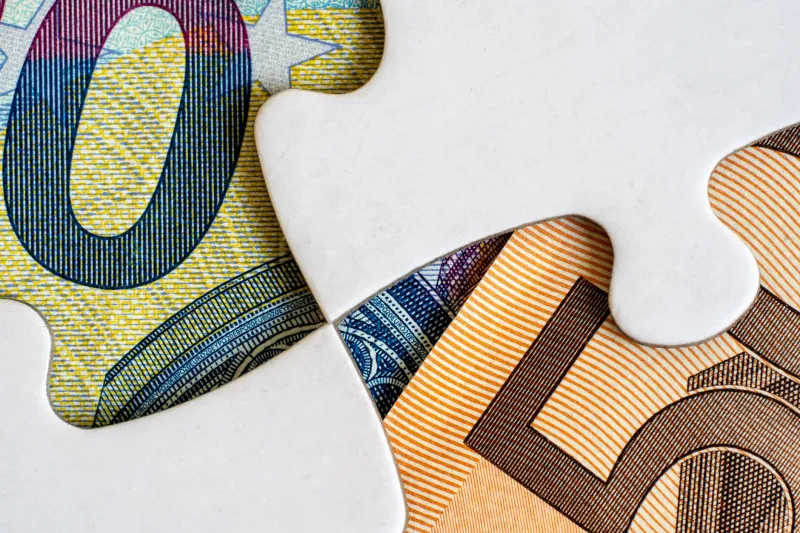
There are two kinds of people in Britain: those who buy jigsaws new, and those who stand in a charity shop on a wet Tuesday, squinting at a box held together with masking tape and thinking, yes, this is a reasonable use of £1.50.
I am firmly in the second camp. I have bought landscapes, cottages, maps of the British Isles and one inexplicable picture of a cat in a bow tie. I have carried them home like rescued animals. I have opened them on the kitchen table with the solemnity of an archivist and the optimism of a person who has not yet checked the corners.
What follows is not official research. Here at Junocrates, official research usually involves tea and a vague feeling. But after years of buying second-hand jigsaws, I can offer a field guide to the peculiar economy of the charity shop puzzle box — and to the quiet betrayal of discovering two edge pieces missing.
The Box Is Part of the Exhibit
A new jigsaw arrives sealed, shrink-wrapped and smug. A charity shop jigsaw arrives with history. The corners are soft. The lid has a faded price sticker from a previous shop, possibly a previous decade. There is often tape, sometimes string, occasionally a rubber band that has perished into a kind of sticky archaeological relic.
And then there is the note.
The handwritten note taped to the lid is the most British document in existence. It is not a legal guarantee. It is a prayer with a biro. Usually it says something like ‘All pieces checked — J.’ Sometimes it adds a date, which is either reassuring or alarming depending on how old the box looks. Occasionally it says ‘Complete as far as I know’, which is the jigsaw equivalent of ‘the cheque is in the post’.
We trust these notes because the alternative is to stand in the shop shaking a box and listening for clues, like a suspicious person with a maraca. And shaking a charity shop jigsaw is simply not done. It disturbs the cardboard dust. It unsettles the volunteers. It makes you look like someone who takes board games too seriously.
A Taxonomy of the Second-Hand Jigsaw
After extensive browsing — and by extensive I mean loitering by the bric-a-brac shelf while pretending to consider a fondue set — I have identified several types of charity shop jigsaw.
The Confident Biro. The note says ALL PIECES CHECKED in capital letters, underlined twice. This is the work of someone who has spent a Sunday afternoon counting cardboard and now wishes to be recognised for it. You respect them. You also suspect they may have counted the same piece twice.
The Pencil Hedger. ‘Think it’s complete?’ The question mark is doing a lot of work. It suggests a person who has looked, hoped and then decided to let the next owner share the uncertainty.
The Spreadsheet Auditor. A printed label with a date, a piece count and initials. This is either deeply reassuring or a sign that the donor has a laminator and too much time. Either way, you buy it. You are only human.
The Silent Box. No note. No tape. No explanation. Just a picture of a Highland cattle and the raw thrill of the unknown. This is jigsaw gambling, and it is the closest many of us will get to Las Vegas.
The Box With Extra Pieces. These are the most unsettling. You finish a 500-piece puzzle and find six pieces left over, all from a different jigsaw. Somewhere out there, another box is quietly incomplete. The charity shop has become a cardboard ecosystem, and we are all just passing pieces around.
The Quiet Betrayal of the Edge Piece
The real drama of a second-hand jigsaw is not the middle. The middle is forgiving. The sky is a sea of blue, yes, but you can bluff your way through sky. The edge is where hope goes to die.
You start with the edges because that is what the box tells you to do. You sort the straight-sided pieces into a neat line. You build the border. You feel competent. You feel like a person who could assemble flat-pack furniture without weeping.
Then you reach the end of one side and realise the line does not meet. There is a gap. Not a dramatic gap — just a small, polite absence where a piece should be. You check the floor. You check under the table. You check the box again, as if the piece might have been hiding behind the picture of a lighthouse. It has not.
Two edge pieces missing. Not one. Two. That is not an accident; that is a decision. Someone knew. Someone taped a note to the lid anyway, and the note said ‘all pieces checked’, and the note was a lie told with the best intentions and a biro that was running out.
At this point, you have options. You can blame the charity shop. You can blame the donor. You can blame the volunteer who priced it at £1.50 and clearly had a lot of other boxes to get through. Or you can accept that a 999-piece landscape is still a landscape. It is simply a landscape with a bit of existential weather.
What We Are Really Buying
A second-hand jigsaw is not really a puzzle. It is a cheap afternoon of analogue concentration. It is a screen-free activity that asks for patience, spatial reasoning and a willingness to accept that the cat in the bow tie may be missing an ear.
It is also a small act of trust. You are buying a stranger’s promise that the world is complete, or complete enough. You are trusting a note written in biro. You are trusting the charity shop to have priced it fairly and the previous owner to have been honest. In a country that runs on queue etiquette and apologising to furniture, this is not nothing.
And when a piece is missing, you forgive. Not because you are saintly, but because the jigsaw cost less than a cup of tea and a biscuit. You forgive because the missing piece becomes a talking point. You forgive because the box is already on your shelf, and the charity shop is not a retailer of perfection. It is a redistribution centre for hope, mild mustiness and cardboard.
I have donated jigsaws myself. I have written notes on the lids. I have used the phrase ‘complete as far as I know’ and felt the weight of it. I have become part of the problem, which is also part of the charm.
So if you require exactly 1,000 pieces, buy new. If you require an afternoon of quiet suspicion, eventual acceptance and a small lesson in national optimism, buy second-hand. Check the corners. Read the note. Make a cup of tea. And when the last edge piece turns out to be missing, try to remember that the box was only ever a promise — and that most promises, like most jigsaws, are worth forgiving for £1.50.