Lucky Dip, Unlucky Socks: A Field Guide to the Village Tombola Economy
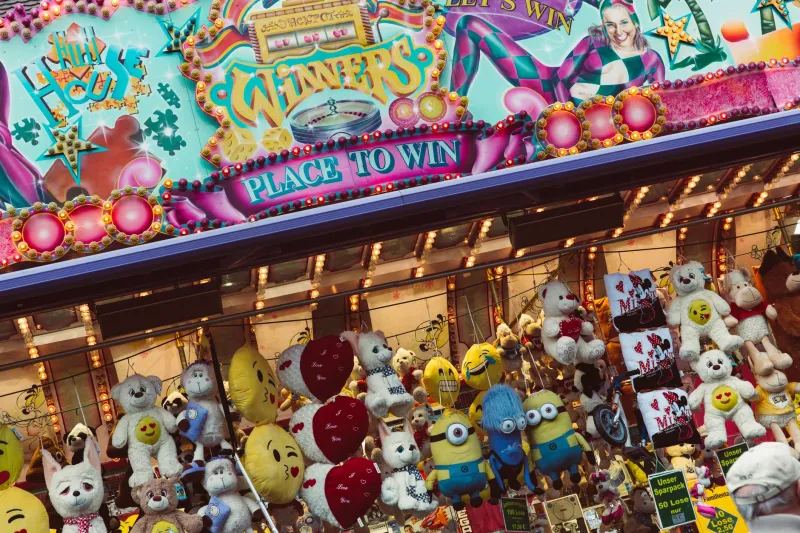
There comes a moment at every village fete when you find yourself standing before a trestle table, clutching a strip of pink tickets and wondering whether fate has anything better in store than a lavender-scented drawer sachet. Welcome to the tombola: Britain’s most polite form of gambling, and its most elaborate system for moving unwanted gifts from one garage to another.
It is a ritual as old as the church roof fund and as reliable as drizzle at a summer fête. You pay your 50p, you dip your hand into a bucket of rolled-up tickets, and you enter a parallel universe where the top prize is a bottle of something red and the booby prize is a tin of pineapple chunks with a dented label. Nobody quite knows who runs it. Nobody quite knows where the prizes come from. And yet, year after year, the tombola table appears, like a mushroom after rain, surrounded by scouts, grandparents and at least one person muttering about whether the odds are better on the cake stall.
The Table of Dreams (and Minor Disappointments)
The tombola table is a masterpiece of optimistic arrangement. The good prizes sit at the back, elevated on a cake tin, bathed in the weak sunlight of a late-summer afternoon. The bottle of local wine. A boxed set of scented candles. A hamper that looks suspiciously like a washing-up bowl filled with pasta and a jar of marmalade. These are the trophies. These are what you tell yourself you are playing for.
In front, however, lies the truth: a sprawling archipelago of bath salts, mini sewing kits, novelty egg timers, golf balls, unbranded shower gel and paperback thrillers with sun-bleached spines. It is not so much a prize display as a museum of British thrift, curated by everyone’s aunt. Each item has a story, and the story is usually: ‘We had one of those already.’
Anatomy of a Prize
Let us categorise the tombola prize, as any serious field researcher would. First, the Toiletries of Unknown Origin: bath cubes, hand creams, tiny soaps shaped like seashells. They smell faintly of hotel bathrooms and earnest Christmas gifts from 1998. Second, the Kitchen Gadget Without Instructions: an apple corer, a lemon zester, a device that might be for eggs or might be for opening paint. Third, the Ornamental Object: a ceramic owl, a wooden duck, a small china cottage that has clearly been regifted at least three times and is beginning to look tired.
Then there is the wildcard: a genuinely decent prize. A bottle of wine. A voucher for a local garden centre. A box of proper biscuits. These are the ones that keep the whole enterprise afloat. Without them, the tombola would simply be a raffle for disappointment. With them, it becomes a community service with a hint of hope.
The Rules of Engagement
Every tombola operates on an unwritten constitution. You must not inspect the tickets before drawing. You must not complain about winning a second pair of gardening gloves. You must feign delight at whatever you receive, even if it is a fridge magnet from a holiday destination you have never visited. And you must, under no circumstances, point out that the prize you have just won is the exact item you donated an hour earlier.
This last rule is crucial. The tombola is a closed loop. Prizes circulate. A bottle of shampoo may pass through six households before returning to the original donor, who will then win it back and take it home with a fixed smile. It is not recycling. It is something closer to reincarnation.
The Regifting Loop
There is a quiet diplomacy to the prize table. The person running it knows exactly which items are desirable and which are merely present. They arrange accordingly. The wine is visible but not too visible. The bath salts are placed at the front, like a small barricade of lavender-scented obligation. When someone wins a particularly tragic prize, the volunteers offer a sympathetic nod, as if to say: ‘We know. We’ve all been there.’
And then there is the regifting economy itself. The tombola is where the nation’s unwanted Christmas presents go to find new homes. That scented candle you received from a colleague? It becomes a tombola prize. That novelty tea towel from a distant relative? Tombola. That bottle of something suspiciously homemade? Tombola, definitely. It is not dishonest. It is simply the British way of ensuring nothing is ever thrown away if it can instead be passed on with a clear conscience.
The Bottle of Wine Problem
The bottle of local wine is the tombola’s crown jewel. It sits at the back, dusty and slightly warm, and everyone pretends not to want it. But they do. They want it very much. Winning the wine is a sign of favour from the gods of small-time luck. Losing it to the vicar’s wife is a source of quiet resentment that may last until Christmas.
Yet the wine itself is rarely any good. It is usually something plummy, slightly sweet, and best described as ‘interesting’. But that is not the point. The point is the winning. The point is the moment of triumph when you hold it aloft and pretend you are not already planning to regift it at next year’s fete.
Winning Gracefully (Or Not)
When you win, you must observe the correct etiquette. A small cry of delight. A modest shrug. A comment along the lines of ‘Oh, lovely, I’ve always wanted one of those’—even if you have three. You must not sprint to the table. You must not ask if there is a better prize available. And you must not, under any circumstances, say ‘Is that it?’
When you lose, you must also be gracious. You fold your tickets, you smile, and you say ‘Well, it’s all for a good cause.’ Then you buy another strip, because hope is a powerful thing and the bottle of wine is still there.
A Modest Proposal
The tombola table is a national treasure. It is Chaos Theory with a raffle ticket. It is the British psyche laid bare: thrifty, hopeful, slightly embarrassed by its own generosity and utterly incapable of throwing away a perfectly good bar of soap. Next time you see one, do not walk past. Buy a ticket. Take your chances. And if you win a pair of socks, remember: someone, somewhere, is already looking forward to winning them from you next year.