The Wobbly Leg of Local Democracy: A Field Guide to Village Hall Chairs
There is a moment, roughly four minutes before a village hall Annual General Meeting begins, when the entire social order of a parish is decided without a single vote being cast. It is the moment people choose a chair. Nobody announces it. Nobody tables a motion. But the seating plan that emerges from that scuffle of metal legs and apologetic murmurs tells you more about local society than any minutes ever will.
I have been observing this phenomenon for years, mostly because I am usually the one sent to fetch extra chairs from the store cupboard and therefore get a ringside view. What follows is not peer-reviewed. It is, however, heavily tea-reviewed.
The Stack: A Layered History of the Parish
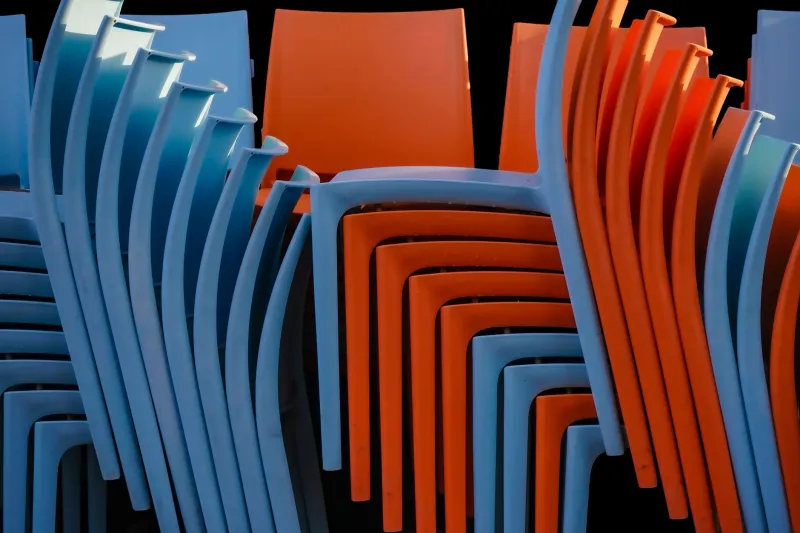
The chairs live in a stack at the back of the hall, and the stack is not random. It is a sedimentary record. At the bottom, the heavy grey plastic ones with the metal legs — the originals, the veterans, the ones that have survived three rewiring programmes and a flood. These are usually the most comfortable and the least accessible, which is a metaphor I am not clever enough to finish.
Above them, the padded fabric chairs in that peculiar shade of municipal blue, purchased in 1998 with lottery money and now slightly shiny at the shoulders. Then the light metal folding chairs, the ones that pinch. And right at the top, one or two chair-shaped objects of unknown origin that appear to have been donated after a house clearance and are, in the words of the hall committee, 'fine if you’re not planning to lean back'.
The rules of the stack are strict and unwritten. You do not take from the middle. You do not take the top chair if a shorter person is nearby. And you absolutely do not, under any circumstances, dismantle the whole thing to get at the good chair at the bottom unless you are prepared to be discussed at the next committee meeting under 'Any Other Business'.
The Throne by the Urn
Every hall has one. Usually a slightly wider chair, often with arms, positioned near the tea station and the radiator. It is not officially reserved. It is simply understood. This is where the person who has been coming longest sits, and they have earned it through decades of setting out cups and never once complaining about the squash.
Attempting to sit there as a newcomer is like sitting in someone’s pew at church. Nothing is said. Everything is noted. You will be offered a biscuit with a slightly cooler smile than usual and you will spend the rest of the meeting wondering why your tea tastes of mild judgment.
The Wobbler: A Chair of Two Truths
Then there is the wobbler. Every hall has at least one chair with a leg that is fractionally short, so that it tips gently to the left and gives the sitter the sensation of being at sea. It is a chair of two truths: it is genuinely uncomfortable, and it is genuinely useful. Because whoever sits in the wobbler gains a small, unearned authority. They list slightly. They look like they are about to make a point of order. People turn to them.
I once saw a man in a wobbler table a motion about the hedge behind the car park and carry the room with him entirely because the tilt made him look like a man with strong opinions and a bad back. The motion passed. The hedge was cut. Democracy wobbles on.
The Jumble Sale Configuration
At jumble sales, the hierarchy inverts. The chairs are set out in rows facing the wrong way, and nobody sits in them because the tables are the real attraction. The chairs become something else entirely: a place to rest a coat, a barrier to stop a toddler entering the crockery section, a negotiating position. You will see a woman in a waxed jacket sitting sideways on a folding chair, using it as a desk, conducting a quiet but firm conversation about the price of a fondue set. This is chair as office.
The AGM: Seating as Spectator Sport
The Annual General Meeting is the chair hierarchy’s FA Cup final. The treasurer arrives early and takes a padded chair near the front, because the treasurer has spreadsheets and needs legroom. The secretary takes the wobbler because she is practical and also because it puts her near the plug socket. The chair of the committee sits by the urn, which is technically neutral ground but everyone knows whose chair it is.
And then there are the back-row sitters — the ones who arrive at 7:29pm, hover by the door, and take the folding chairs nearest the exit. They are not disengaged. They are simply prepared. They have been to enough AGMs to know that the discussion about the village fete rota can go to unexpected places and that a clear run to the car park is a form of self-care.
A Small Defence of the Whole Business
It would be easy to mock all this. And I do, fondly. But there is something rather lovely about a room full of people who have agreed, without saying so, that the grey chair is best, that the wobbler is for the brave, and that whoever is by the urn is probably going to ask whether anyone has seen the key to the defibrillator cabinet.
These chairs have held christenings and keep-fit classes, polling days and parish council rows, birthday teas and the aftermath of a thousand bring-and-buy sales. They are stacked at the end of the evening by whoever is left, which is usually the same six people, and they are stacked in exactly the right order, because that is how things are done.
Next time you are in a village hall, look at the chair you choose. Then look at who notices. You will learn more about the place in ten seconds than any noticeboard could tell you in a year.