The Willows, Dunroamin and the Quiet Anarchy of the Front Gate Plaque
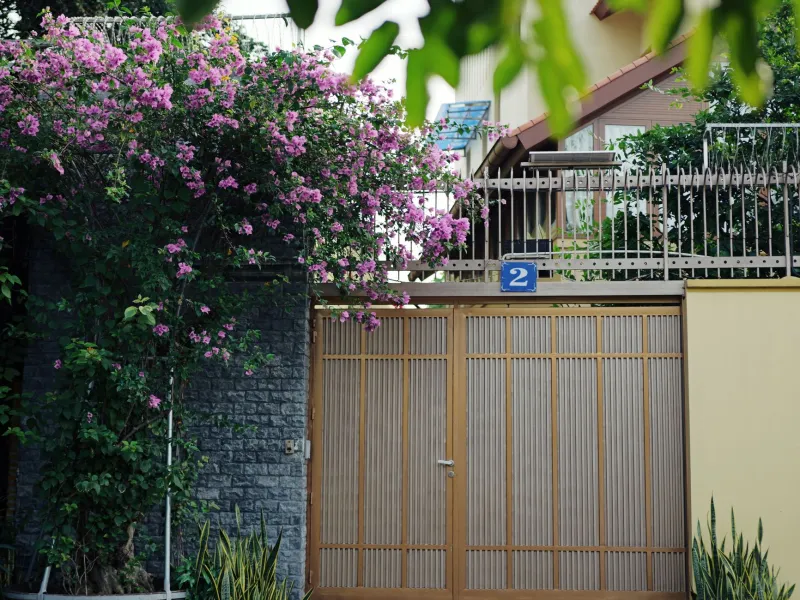
You can learn a lot from a front gate. Not the gate itself, which is usually either a squeaky wrought-iron affair or a piece of uPVC pretending to be wrought iron, but the plaque. That small rectangle of brass, slate or suspiciously shiny plastic that announces, with total conviction, that this perfectly ordinary house is called something else entirely.
Britain is a country that has largely accepted numbered addresses, then quietly gone behind their backs and given them nicknames. It is the smallest possible act of rebellion, and it costs about £14.99 from a garden centre. Put the kettle on and let us examine the evidence.
A Rough Taxonomy of the Front-Gate Plaque
The Bungalow Puns. Dunroamin. Bide-a-Wee. Rest-a-While. These are the classics, and they are almost always attached to a 1930s semi or a pebble-dashed bungalow with a hanging basket and a sense of humour. The joke is the point. Dunroamin is a promise to the street and a slight lie to the self. Its darker cousins — Dunwurkin, Dunpayin, Dunroamin-But-Not-Just-Yet — suggest a household that has stared into the abyss and decided to make a cup of tea instead. There is also Casa Mia, which is Spanish for 'my house' and usually denotes a bungalow in Cleethorpes with a caravan in the drive.
The Suspiciously French. Mon Repos. Chez Nous. Petit Coin. These tend to appear on 1960s detached houses with a carriage lamp, a gravel drive and a Renault Captur. The accent on the plaque is optional; the gravel is not. Mon Repos translates as 'my rest', which is optimistic given the proximity of the A38. Chez Nous means 'our place', a phrase that sounds charming in Provence and faintly defensive in Staffordshire.
The Botanical Boast. The Willows. The Laurels. Rose Cottage. Fernlea. These names are aspirational gardening at a distance. Frequently there are no willows, no laurels and no roses, just a leylandii hedge that has declared war on the conservatory. The naming is a wish, not a description. Rose Cottage is often a 1970s brick box with a white front door and a lavender bush that has seen better days. It is the horticultural equivalent of calling a cat 'Tiger'.
The Historical Repurposer. The Old Forge. The Old Post Office. The Old Chapel. The Old Police House. Sometimes these are true, and the building really did shoe horses or sort letters. Sometimes the building was a Spar in 1987 and the name is doing a lot of heavy lifting. Either way, local history has become a lifestyle accessory. The Old Chapel sounds serene until you remember the damp.
The New-Build Fantasy. Badger's Rest. Hedgehog Hollow. Kingfisher Meadows. These are named by a marketing team in Reading before anyone has seen a badger, a hedgehog or a kingfisher within three miles. The residents move in and inherit a nature trail that exists only on the laminated site plan. The plaque is not a name; it is a promise the developer had no intention of keeping.
The Passive-Aggressive. A house name is one thing. A house name with 'Private' underneath it is a whole personality. Private suggests that without the sign, strangers would be forming a conga line through the hall. Add 'No Cold Callers', 'Beware of the Dog' (there is no dog) and a neighbourhood watch sticker, and you have a front gate that functions as a full emotional boundary system. The British have never been comfortable saying 'please leave me alone', so we bought a plaque instead.
The Numbered House That Insists on a Name
Here is the quiet anarchy of it all. Most of these houses already have a number. The name is not replacing the number; it is running alongside it, like a stage name. Royal Mail ignores the name. Delivery drivers ignore the name. The pizza app ignores the name. The name exists purely for the owner, and perhaps for the occasional visitor who is told, 'We're The Willows, not number 42' and then gets lost anyway.
There is something admirably stubborn about this. In a country where we rarely rename streets or towns, we rename our semis. We cannot change the postcode, but we can change the plaque. The number is for the council; the name is for us. The gate is the smallest possible parliament, and the plaque is the motion that passed unanimously.
What It All Reveals, Which Is Mostly Class and Tea
House names are a class signal, but a muddled one. The Old Rectory suggests inherited cutlery. Dunroamin suggests wit and a mortgage. Mon Repos suggests a fondness for France and a Renault. A new-build called Kingfisher Meadows suggests a marketing department and a show home with a bowl of fake lemons. None of these are reliable indicators of anything except how someone feels about their front gate.
And yet the impulse is deeply British. We are a nation that expresses identity through small, low-stakes objects: a mug, a tea towel, a plaque by the bins. Naming a house is cheaper than a new kitchen and more permanent than a tattoo. It is a tiny memoir written in brass. It says: someone lives here, and they have opinions about willows.
So next time you pass a gate that says Dunroamin, do not sneer. Do not assume the owners are simple folk with a sense of humour. Assume they have looked at the number 42, found it lacking, and decided to improve it. That is not pretension. That is project management. And frankly, it is more honest than most of us manage before 9am.