The Carrier Bag Constellation: Field Notes from Under the Kitchen Sink
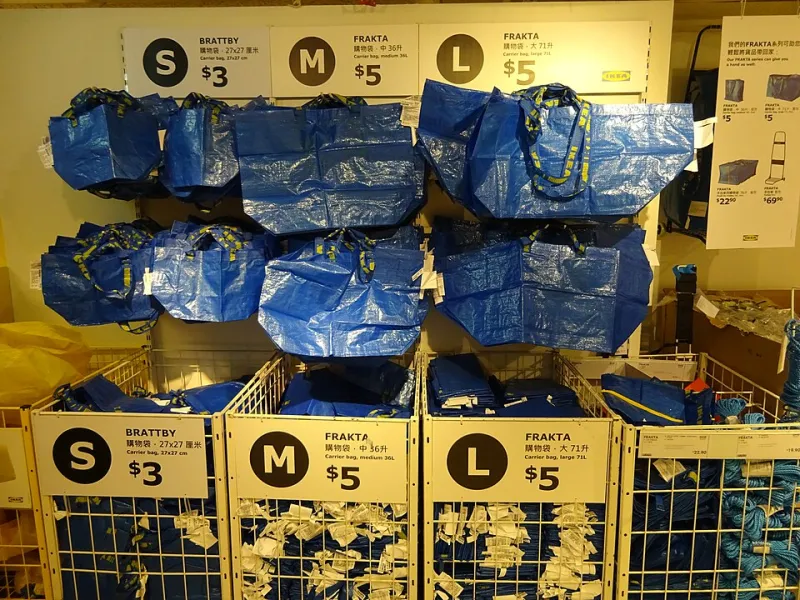
Photo: Hoilnawoms, CC BY-SA 4.0, via Wikimedia Commons
Somewhere in your home, possibly under the sink, possibly in the cupboard beside the fuse box, there is a bag containing other bags. It is not glamorous. It has no lid, no label and no obvious curator. Yet it is one of the most reliable institutions in British domestic life: a soft, crinkling reserve of carrier bags, totes and mysterious nylon holdalls, kept against the day when you absolutely must carry something somewhere.
In 2026, we are told that everything is optimised. Our calendars sync, our doorbells have opinions and our fridges can allegedly suggest a frittata. Meanwhile, under the sink, a Waitrose bag for life is quietly containing fourteen other bags, one of which contains a receipt from a shop that closed in 2019. This is not chaos. It is a filing system without labels, and it deserves a proper field study.
The National Reserve
The bag of bags is not really about bags. It is about the fear of being caught short. The moment arrives — a leaking bottle, a library return, a surprise rhubarb donation from a neighbour — and you need something with handles. The bag of bags answers. It is Britain's domestic equivalent of a strategic petroleum reserve, except it smells faintly of washing powder and old receipts.
The 5p carrier bag charge arrived in England in 2015, with similar charges already in place elsewhere in the UK. The intention was sensible: use fewer bags, reuse the ones you have. The result, in many homes, was a small museum of reusable bags, each one kept because throwing it away would be wasteful and because it might be the exact bag required for an unspecified future task. The charge did not end the carrier bag. It gave it tenure.
A Modest Taxonomy
No two bags of bags are identical, but patterns emerge.
The Waitrose bag for life. Stiff, upright, faintly aspirational. It has carried a click-and-collect order, a birthday card and, on one memorable occasion, a marrow. It is too good for bin duty and knows it.
The emergency duffel. Larger than strictly necessary, usually found at the back, often containing three smaller bags. Its origin is unclear. It may have come from a gym, a conference or a relation who moved house and left it behind. It is the bag of bags' own insurance policy.
The crinkled carrier. Thin, noisy, possibly bearing the logo of a defunct estate agent. It lives in the moment. It has no structural integrity but excellent enthusiasm.
The festival bag. One handle, a faint smell of rain and cider, a sticker for a band nobody remembers. It has seen things. It is not to be used for school runs.
The guest bag. A handsome paper bag from a nice shop, kept because it seemed too pleasant to recycle. It is now slightly creased and has become part of the family.
The bag that is not a bag. A dry-cleaning cover, a net produce bag, or a length of bubble wrap that has been promoted beyond its station. Every collection has its eccentrics.
The Unwritten Rules
The etiquette of the bag of bags is firm, if rarely spoken aloud. You do not empty someone else's bag of bags without consent. You may look inside, but you must not rearrange it. Folding is optional; stuffing is traditional. If a guest offers you a bag for something you are taking home, you accept it and later add it to your own collection, where it will enter the general population and possibly become the emergency duffel's next tenant.
The most sacred moment is the double-bag discovery: reaching into the bag of bags and finding that the bag you have pulled out already contains a smaller bag. This is not a failure of organisation. It is a small inheritance.
There is also the checkout dilemma. You have arrived without a bag. You buy one for 30p, feel a flicker of environmental guilt, then remember the bag of bags at home and feel a second flicker of domestic shame. In 2026, with delivery slots and click-and-collect forming half the weekly shop, the bag of bags has become even more important: it is the physical interface between the kitchen and the boot of the car.
Thrift, Guilt and the Quiet Archive
What the bag of bags really records is not waste but intention. Every bag was kept for a reason. The sturdy one was for heavy shopping. The foldable one was for a walk. The paper one was for a present. The one with the broken handle was for bin duty, then for bin duty's understudy. We are not hoarding; we are maintaining a small, soft infrastructure.
That said, there is a limit. At some point, usually while looking for the Sellotape, you will count the bags and discover there are thirty-seven of them. You will remove four. You will keep thirty-three. This is the British compromise: a purge that is really a gentle reshuffle.
The bag of bags says something about us that is easy to miss. It says we would rather be prepared than pristine. It says we distrust the idea that everything can be bought fresh at the exact moment it is needed. It says that a household is not just a place where things happen, but a place where things are kept in case they happen again. In a year of algorithmic recommendations and same-day delivery, the bag of bags remains stubbornly analogue: a rustling, handle-bearing reminder that the future is uncertain and might require a tote.
So next time you open the cupboard under the sink, treat it as a collection rather than a mess. The bag of bags is not the enemy of order. It is order wearing a slightly crinkled coat.