The Linen Stratigraphy: Digging Through Britain’s Airing Cupboards
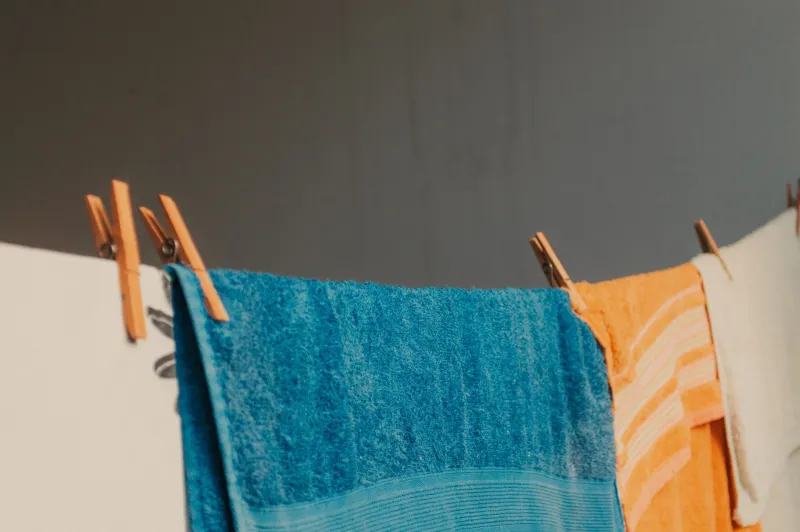
The airing cupboard is not a cupboard. Let’s start there. A cupboard is a place where you put things and forget them. The airing cupboard is a place where you put things and they slowly achieve a kind of thermal sainthood. It hums. It radiates. It smells faintly of dried cotton, old Calpol and a lavender bag that gave up in 2011. It is, in short, Britain’s warmest museum, and the collection policy is simple: if you can’t throw it away, put it in there and shut the door.
I conducted my audit on a Tuesday, which is the correct day for this sort of thing. The boiler was doing its low, reassuring rumble — the sound of a house clearing its throat — and the tea was going cold on the landing windowsill. I had a notebook, a torch and the vague sense that I was about to discover something I had been avoiding since roughly 2004.
The Warm Core
Every airing cupboard has a warm core. Sometimes it is a hot water tank wrapped in a foam jacket that looks like a duvet having a nervous breakdown. Sometimes it is simply the back of the boiler, breathing gently through the slats. Around this core, things dry. Towels become crisp. Sheets become almost brittle with comfort. A pair of tights hung over the pipe in a moment of optimism becomes a permanent installation.
The heat is not aggressive. It is the heat of a radiator that has been left on in a room nobody uses. It is the heat of a car seat after a short journey. It is the heat of a childhood bathroom, when the airing cupboard door was opened and the whole landing filled with the smell of clean linen and something faintly medicinal. I stood there for a moment too long and felt like I was seven again, waiting for a bath and being told not to touch the tank.
Layer One: The Everyday Towels
The top layer is always towels. Not the good towels — those are in the bathroom, folded into a swan shape if you are the sort of person who does that. These are the everyday towels: the ones that have been through the wash so many times they have achieved a kind of softness that is almost aggressive. They are the colour of tea with too much milk in it. They have a small hole near the hem that has been there since the Blair government and is now considered a feature.
There is also the Scratchy Towel. Every airing cupboard has one. It is a towel of unknown origin, possibly inherited, possibly won in a raffle, and it has the texture of a loofah that has seen things. It is never used unless every other towel is in the wash, and even then it is used with a sense of quiet betrayal. Beneath the Scratchy Towel is the Guest Towel, which is slightly nicer and has never been used by a guest.
Layer Two: The Inherited Sheets
Push past the towels and you enter the geological layer of sheets. These are not your sheets. These are the sheets that came with the house, or from your grandmother’s house, or from a house clearance in 1998 that your mother attended and from which she returned with a bin bag and a look of triumph. They are embroidered. They are a size that no longer corresponds to any bed sold in Britain. They have a faint smell of mothballs and optimism.
There is always at least one sheet with a story. Mine has a small, neat patch in the corner, done by someone’s hand in a thread that no longer matches the sheet. I don’t know who did it. I don’t know when. But I keep it, because throwing it away feels like throwing away the hand that did the patching. The airing cupboard is full of these small, anonymous kindnesses, pressed flat between towels.
Layer Three: The Apothecary of Half-Used Potions
Ah, the potions. This is where the airing cupboard becomes genuinely interesting. Every British airing cupboard contains a small, unofficial pharmacy: a bottle of Calpol with a sticky neck and a date that has faded into allegory; a tub of Vicks VapoRub that is technically older than some of the family; a bottle of TCP that has been used once and will outlive us all; a sun cream with an SPF of 15 and a use-by date of 2004; a lavender water that was a gift and is now mostly water.
There is also the Mystery Bottle. Mine is brown glass, unlabelled, half full of something that smells like aniseed and regret. It could be a remedy. It could be a liqueur. It could be a science experiment that got out of hand. It is going to stay there, because the moment I throw it away is the moment I will need it. That is the law.
Layer Four: The Mysterious Tins
At the very back, behind the tank and the pile of spare duvet covers, is the tin. It is always a Quality Street tin, or a biscuit tin, or a tin that once held something sensible and now holds the following: three buttons, a single curtain hook, a key to a door that no longer exists, a sewing kit with one needle and no thread, a small piece of ribbon, a warranty for a boiler that was replaced in 2011, and a foreign coin.
This tin is the airing cupboard’s subconscious. It is where the odds and ends go when nobody knows what to do with them. It is not organised. It is not useful. But it is deeply, profoundly British. It is the physical manifestation of “it might come in handy”, which is a phrase that has been responsible for more airing cupboard clutter than any other sentence in the language.
The Emotional Temperature
The airing cupboard is warm, but it is also emotionally warm. It is a promise to future guests: come and stay, we have a towel. It is a promise to past selves: we kept the sheet. It is a promise to the person you might become: one day you will need a brown bottle of mystery liquid and a single curtain hook, and you will know exactly where to find them.
There is a faint shame to it, of course. The airing cupboard is where you put the things you can’t decide about. But there is also comfort. In a world of decluttering, minimalism and the aggressive encouragement to “spark joy”, the airing cupboard remains a quiet act of resistance. It says: I don’t know why I’m keeping this, but I am keeping it, and that is enough.
A Call for Your Strangest Finds
This is where you come in. I want to know what is at the back of your airing cupboard. Not the towels — we all know about the towels. I want the tin with the key. The sheet with the patch. The bottle of something that smells like a dentist’s waiting room. The object you cannot identify but have moved house with three times.
Send them to Junocrates — words, photos, or a slightly embarrassed description. We are compiling a people’s archive of the airing cupboard, a warm museum with no curator and no gift shop, just the hum of the boiler and the smell of clean cotton. It will be the most British exhibition never to be assembled.
The Hum Beneath It All
I closed the door at the end of my audit and the boiler carried on humming. It is still humming now, as I write this, with a cup of tea going cold beside me. The airing cupboard is not a cupboard. It is a heartbeat. It is the warm, slightly chaotic centre of the British home, full of things we can’t throw away and things we might need, which are often the same thing.
Go and have a look at yours. I’ll wait.