The Great Fat Ball Standoff: A Season Observing Britain's Tiniest Feud
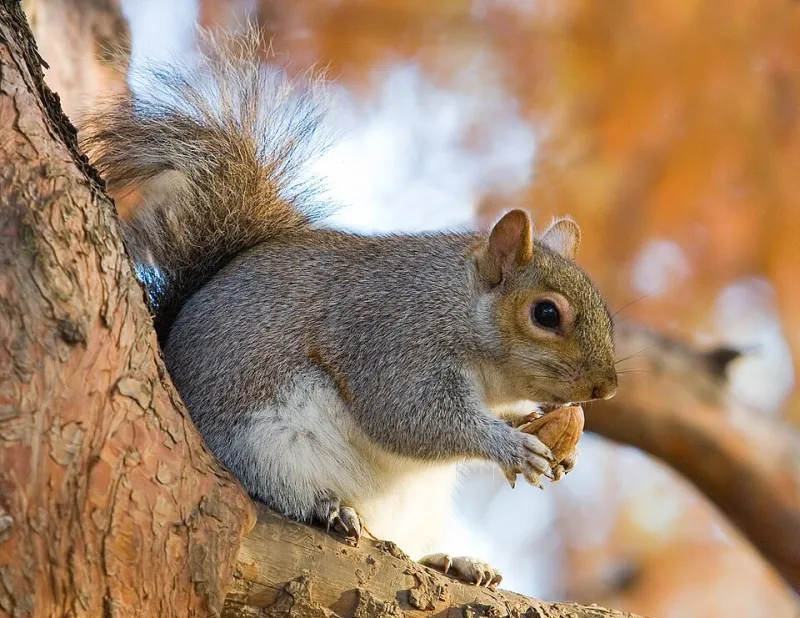
Photo: Diliff, CC BY-SA 3.0, via Wikimedia Commons
There is a moment, usually around 7.40 on a wet Tuesday morning, when the garden stops being a garden and becomes a parliament. The bench is the back bench. The laurel is the press gallery. And the fat ball feeder, swinging gently under the weight of a starling with opinions, is the dispatch box.
I did not set out to become a political correspondent for the birds. It began, as these things do, with a modest purchase: a feeder, a tub of fat balls, and a quiet belief that I was doing something nice. Eleven months later I have a notebook, a baffle, a small ongoing dispute with a squirrel, and a neighbour who texts me photographs of finches with the smugness of a man who has just beaten me at tennis.
The Installation, and the First Act of War
The feeder went up on a Sunday. By Wednesday the squirrel had arrived. Not a nervous squirrel, either – a squirrel with the confident bearing of a middle manager who has read the health and safety policy and decided it does not apply to him. The baffle, which the packaging described as 'squirrel-proof', was treated less as a barrier and more as a suggestion box. He sat on top of it, ate a fat ball with the slow deliberation of a man eating a sandwich in a lay-by, and then looked at the kitchen window as if to check I was watching.
Squirrel-proof is a phrase much like 'no timewasters' or 'the cheque's in the post'. It describes a hope, not a mechanism. The baffle works in the way a garden gate works against a determined fox: it adds a small, almost ceremonial delay.
Still, the birds came. And this is where the real drama began.
Meet the Constituency
What arrives at a British feeder is not a gentle cross-section of birdlife. It is a cast list with existing grudges.
The starlings arrive first, in a clatter of wings and bad manners, and bulldoze the fat balls with the efficiency of a removal firm. The house sparrows bicker constantly, though I have never once worked out what about. The blue tits dart in, take a crumb, and leave as if they have remembered an appointment. The great tits are bigger and behave like they know it. The robin does not so much feed as officiate, standing on the fence and looking disappointed in everyone.
And then, if the light is right and the wind is in the correct quarter, the goldfinches. A pair, red-faced and neat, arriving like guests who have been invited to a party that has got slightly out of hand.
Fat balls, it turns out, are the pub crisps of the avian world: cheap, plentiful, and capable of starting a fight at any hour.
The Fat Ball Economy
There is an entire economics to this. A tub of fat balls vanishes in a week if the starlings find it. Suet pellets last longer, but attract different customers. Sunflower hearts are the premium product – no husks, no mess, and a price that makes you briefly reconsider your priorities. Nyjer seed is for the goldfinches, who scatter most of it on the lawn with the carelessness of the very wealthy.
The RSPB is clear on a few points, and I pass them on as a public service announcement from someone who has learned the hard way. Mesh bags are best avoided – small birds can get their feet caught. Feeders should be cleaned every fortnight or so, ideally with hot soapy water and a bit of patience. If you see a sick bird, take the feeder down for a couple of weeks. It is not glamorous work, but neither is dentistry, and we accept that as necessary.
What the RSPB cannot legislate for is the atmosphere at the feeder. There is a pecking order, and it is enforced with the precision of a members' club. The starlings have the top table. The tits have a rotating rota. The pigeons wait underneath, clearing up like relatives after a wake. And the magpie, when it appears, does not feed so much as survey, which is somehow worse.
The Neighbourly Ledger
Across the fence lives a man called Geoff, who has been feeding birds since before it was fashionable and who keeps his own ledger. Geoff does not boast. Geoff simply mentions. 'Had a bullfinch on Tuesday,' he will say, with the air of a man reading out a routine weather report. Then he will pause, just long enough, and add: 'You?'
The goldfinch is the status symbol of the suburban feeder. A pair of them is a triumph. A family is a coronation. I once texted Geoff a photograph of three on my feeder and received in return a photograph of four on his, taken from a slightly better angle. I have never fully recovered.
This is the quiet one-upmanship of the British garden: not loud, not unkind, just a gentle, ongoing audit of who has tempted what. There is a WhatsApp group. There are, I suspect, screenshots.
Squirrel Diplomacy
I have tried the usual remedies. The baffle. The chilli powder, which the squirrel ignored and the birds seemed to enjoy. The slinky device, which the squirrel treated as a fairground ride. The cage feeder, which has so far held, though I notice he now sits underneath it, eating the fallen crumbs and looking patient.
Squirrels are not pests, exactly. They are a stress test. They reveal what your feeder is really made of, and also what you are really made of, which is a person who will stand at a window at 6.50am shouting 'oh, for goodness sake' at a rodent.
The Hawk Clause
Every so often the garden goes silent. Not quiet – silent. The starlings vanish. The tits freeze. The robin, for once, has nothing to say. Then the sparrowhawk arrives, low and fast, and the whole republic holds its breath.
It is a reminder, if one were needed, that the feeder is not a sanctuary. It is a stage. And the drama has consequences.
What the Fat Ball Republic Taught Me
I am not a scientist. I am a man with a notebook, a slightly damp pair of binoculars, and a growing suspicion that the BTO's Garden BirdWatch scheme is the closest thing we have to a national census of small, opinionated creatures. But I have learned a few things.
That a goldfinch on a suburban feeder is a small, genuine thrill. That cleaning a feeder is less tedious than it sounds. That a squirrel is a problem you solve by accepting you will not solve it. And that the real pleasure of the thing is not the counting, or the comparing, or even the winning. It is the ten minutes before the kettle boils, standing at the window, watching a blue tit decide whether the coast is clear.
The fat ball republic has no constitution, no flag, and no fixed term. It runs on weather, appetite, and the faint hope that today might be the day the bullfinch turns up. I have not yet had a bullfinch. Geoff has. I am, as ever, keeping notes.