The Porcelain Frog Has a Secret: A Field Survey of Britain’s Spare-Key Subculture
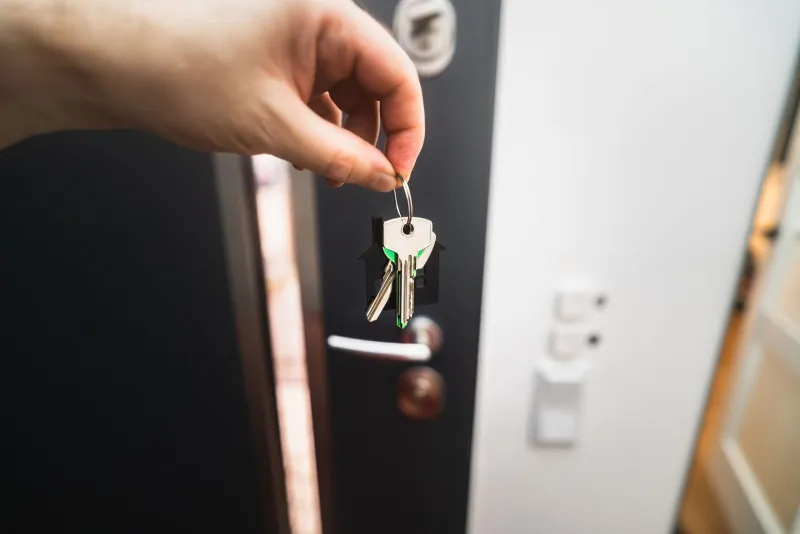
It began, as these things do, with a text from next door: ‘You still got our spare, love?’ I checked the hook by the back door, where a brass key dangles from a loop of garden twine beside a label reading ‘No. 14 — side gate — cat’. I did. I had had it for three years. I could not remember agreeing to take it, and I certainly could not remember what the cat had to do with anything. This, I realised, is the spare key economy: a vast, informal system of trust, labelled brass and unlabelled anxiety that keeps Britain’s doors open to the right people and, occasionally, the wrong roofer.
At Junocrates, we are not immune. There is a bowl in our kitchen that contains four keys, two fobs, a tiny screwdriver and something that might once have been a locker key. Nobody knows what any of them open. We are keeping them anyway. This is the national condition.
The Four Great Key-Holding Tribes
After several weeks of asking neighbours, relatives and one man at a car boot sale who seemed keen to discuss locks, I have identified four main types of spare-key custodian.
First, the Hook Neighbour. This person has a key hook by the door, often shaped like a ceramic mushroom, and a key for your house on it. They will water your plants, feed the cat and, if you are unlucky, reorganise your recycling. Their key label is a work of cryptic literature: ‘Sarah’s back door — not the one by the bins’. You are never quite sure whether Sarah is the neighbour, the cat or the bins.
Second, the Key Safe Keeper. Their key is not hidden so much as imprisoned in a small metal box beside the front door. The combination is known to six people, two of whom have moved to Devon. It is changed roughly once a decade, usually after a scare, and then immediately forgotten. The key safe is a wonderful invention for carers, cleaners and anyone who enjoys standing in the rain pressing 1-2-3-4 while a dog barks at them.
Third, the Plant Pot Strategist. Their spare key lives under a pot, inside a fake rock, or in the hollow belly of a porcelain frog. This is security through embarrassment. A burglar would have to want it very badly to rummage through wet compost while a garden gnome watches. The porcelain frog is the traditional sentinel of the British spare key: ugly, heavy, and apparently trustworthy.
Fourth, the Reluctant Custodian. This is most of us. We have a key and no clear memory of why. It arrived during a holiday, a hospital stay, a boiler crisis or a brief period when someone’s cat needed medication. Now it lives on a keyring that resembles a medieval jailer’s kit. We cannot throw it away in case it matters. We cannot return it because we are not sure who gave it to us. It has become part of the family, albeit a small, sharp part that occasionally pokes us in the thigh.
The Handover Ritual and Its Unwritten Rules
Lending a spare key is not a transaction. It is a ceremony. It should be conducted at the doorstep, preferably with tea, and with a sentence that begins ‘Now, this is the tricky one’. The key is handed over in a manner that suggests both great trust and mild inconvenience. The recipient is expected to say ‘Are you sure?’ and the lender is expected to say ‘Course I am, it’s only a key’ while secretly wondering whether they have just handed over access to their entire personality.
Returning a key is harder. You cannot simply post it through the letterbox, because that implies you have been carrying it around like a guilty secret. You must return it in person and provide a brief account of what you did with it. ‘I watered the tomatoes and did not touch the good scissors’ is acceptable. ‘I used your washing machine’ is a confession. ‘I had a bath’ requires a follow-up conversation.
There is also the matter of key labels. A key with no label is a riddle wrapped in a mystery wrapped in a piece of masking tape that has lost its ink. A key with too many labels is a paranoid novel. The ideal label is concise, legible and slightly mysterious: ‘Back — not shed’. It tells you what you need to know while leaving room for doubt.
The Ledger Nobody Updates
Here is the flaw in the spare key economy: locks change, relationships change, and nobody tells the keys. The key you gave to a neighbour when you went to Cornwall is still in circulation. The key you gave to a builder who did a very good job on the boiler is now in a van somewhere near Leicester. The key you gave to an ex is probably in a drawer, next to a lighter and a hair bobble, waiting for a moment that will never come.
Ask a householder who has a key to their house and watch the face. There is a pause. Then a list that begins confidently and ends in vagueness. ‘Next door, obviously. My mum. The cat sitter — well, she moved. The bloke who fixed the roof, but that was ages ago. And there’s one in the frog, but I think that’s for the old shed.’ Nobody has a ledger. The ledger is memory, guilt and the faint hope that the subject will not come up again.
When locks are changed, the old keys become ghosts. They still exist. They still fit something. They simply no longer fit the thing they were designed for. This is how you end up with a drawer full of brass orphans and a vague sense that you have let down a neighbour you cannot name.
The Mystery Key Drawer
Every home has one: the drawer where keys go to be forgotten. It contains a front door key from a previous address, a padlock key for a padlock nobody has seen since the garden tidy-up, and at least one small silver key that might open a suitcase, a diary or a secret door in a stately home.
Do not throw them away. That is the rule. The mystery key may be worthless, but it may also open the shed containing someone’s late father’s lawnmower. It may be the only way into a neighbour’s garage, a community allotment or a filing cabinet full of village hall minutes. The mystery key is potential. It is also a small piece of metal that makes you feel vaguely responsible.
A Modest Proposal for Key Amnesty
What Britain needs is not a national database — heavens, no — but a local key amnesty. A Tupperware box at the village hall. A notice on the board: ‘Unidentified keys? Bring them Saturday. Tea provided.’ Someone with a label maker could preside. Someone else could bring a lock to test them on. It would be chaotic, mildly unlawful and deeply British.
Until then, the spare key economy will continue as it always has: on hooks, under frogs, inside key safes with codes that predate the current occupants. It is a system held together by trust, tea and the polite fiction that we all know who has what. The porcelain frog knows more than it is letting on.
If you are reading this and you think you have a key to our house, please let us know. We have a bowl. We are not judging. We are simply trying to work out what the cat has to do with it.