Twelve Pencils and a Lawnmower: Inside Britain's One-Room Museums
The first thing you notice is that there is no queue. The second thing you notice is the smell — beeswax, old paper, and the faint ghost of a hundred church-hall teas.
I am standing in a room roughly the size of a decent garden shed, in a village I will describe only as 'somewhere off a B-road', looking at twelve pencils.
They are, I am told, historically significant pencils. There is a pencil from a now-demolished factory. There is a pencil with a commemorative band. There is a pencil that a man apparently carried through a war and did not write with, which seems to me either very disciplined or very odd. The woman showing me round is called Margaret, she is 74, and she opens the place on Saturdays and Wednesdays from Easter to October, and she says the phrase 'the young people don't come' with the tone of someone reporting the weather.
This is Britain's one-room museum sector. It does not appear much in the cultural conversation. It is, I have come to believe, the country's actual archive.
The Economics of an Honesty Box
You would think the numbers would be bleak, and in some ways they are. Insurance has gone up. Electricity has gone up. The building the collection lives in — a former chapel, usually, or a reading room, or a lean-to that has been grandfathered into respectability — has a roof that needs attention, and a rota of volunteers who are, to put it gently, not getting any younger.
But the model is also strangely resilient, because the overheads are close to zero. Nobody draws a salary. The building is often owned outright by a trust of eleven people, four of whom are related. The money comes from an honesty box, a small grant, a quiz night, and the occasional sale of a pamphlet written by a retired schoolteacher with strong views about Victorian drainage.
In 2026, with council budgets doing what council budgets do, several of these places have discovered something unexpected: the visitors who do come are generous. A fiver in the box is not unusual. One curator told me she found a twenty-pound note with a note attached reading 'for the roof'. She has kept the note.
The Obsessions Are the Point
What distinguishes these collections is that they were not assembled to tell a story. They were assembled because somebody could not stop.
The lawnmower archive — I am not making this up — is run out of a lock-up and a spare room, and contains examples going back over a century. The curator, a quietly fanatical man in his sixties, can tell you the year of any mower by the shape of the handle. He does not consider this unusual. He considers it the minimum.
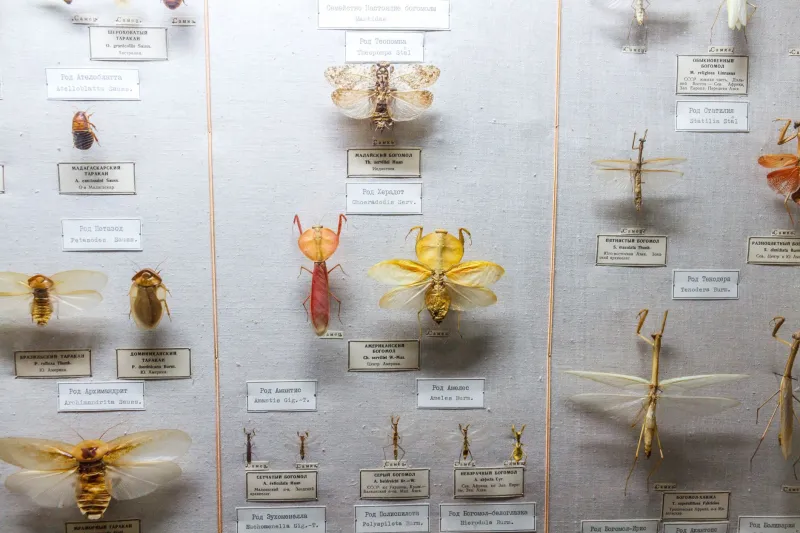
Elsewhere there is a collection of chapel communion tokens. A collection of bus tickets from one route. A collection of hats worn by a marching band. A display of objects found in a single field over forty years, arranged in a glass case with the reverence usually reserved for Egyptian antiquities, which — if you think about it — is exactly what they are.
There is something profoundly British about this. We distrust grand narratives, so we build tiny ones and put them in cabinets.
What the Big Places Cannot Do
The great national museums do scale and scholarship and the complicated business of explaining a country to itself. But they cannot do what Margaret does, which is to tell you about the pencil factory as a place where her aunt worked, and then pause, and then say, 'It's all houses now.'
That pause is the whole thing. You cannot curate a pause. You have to be there.
How to Keep Them Alive (Without Being Patronising)
There is a tendency, when writing about places like this, to make them charming. They are charming. But charm is not a business plan, and the people running them are not looking for a nice paragraph. They are looking for visitors, and volunteers, and someone to take over the rota in about six years.
So: go. Check the opening times, which will be wrong on the website. Take cash. Sign the visitors' book, because someone counts those entries and reports them at the AGM. Buy the pamphlet. If you have a specific area of pointless expertise — drainage, semaphore, biscuit tins — offer it. They will not say no. They have never said no to anyone in their lives.
And if you see a small sign on a gate on a Saturday, pointing at a shed with a hand-painted arrow, do not drive past. That is the most honest museum in the country, and it is open for about four more hours.